It’s disappearing quickly, but this is what Hillcrest Baptist Hospital looked like when it opened in 1920.
“Hillcrest Baptist Hospital began as the Central Texas Baptist Sanitarium in 1920 three miles north of Waco on land donated by J. J. Dean. The idea for a hospital originated with First Baptist Church of Waco minister Arthur James Barton, and the Waco Baptist Association approved the proposal in 1915. J. M. Dawson, also of First Baptist, chaired the hospital’s Board of Directors, filed at charter, and began construction in 1917. World War I delayed the opening, but once opened, the hospital had a School of Nursing and support from Columbus Avenue, Calvary, and Seventh and James Baptist churches as well as First Baptist. The name changed to Hillcrest in 1938, and in 1945 the Baptist General Convention of Texas assumed control. Photo courtesy Mr. and Mrs. Sonny Chatham.”
This original building faced Proctor Avenue, with Herring Avenue behind it.
Quoted Text and photo from the book “Waco:A Sesquicentennial History” (1999) by Patricia Ward Wallace.
This is one of many images in the “Historic Buildings” gallery on our website. This beautiful City Hall sat in the middle of the Square in Waco until a new one was built in 1930.
This photo is by Fred Gildersleeve. From the Gildersleeve-Conger Colkectiin, The Texas Collection, Baylor University. From the book “Gildersleeve-Waco’s Photographer” (2018) by Geoff Hunt and John S. Wilson.
Pete and Joy Griffin owned this grocery store/service station/bait shop out North 19th, just across the Bosque River Bridge. Most people referred to this area as Bosqueville, but it was actually Banana Junction, a name most likely given to it by Camp MacArthur (1917-19) soldiers. In those days, there was a large fruit stand there, and the soldiers would stop for refreshment as they marched out to Bosqueville and China Spring for training exercises. The true historic Bosqueville is further up Rock Creek Road, where the churches, cemetery and school are located.
Known by locals as “Pete’s”, this store was a well-loved gathering place, and it lives on in the memories of those who knew it well.
Pete Griffin’s Grocery. Photo from The Texas Collection, Baylor University.
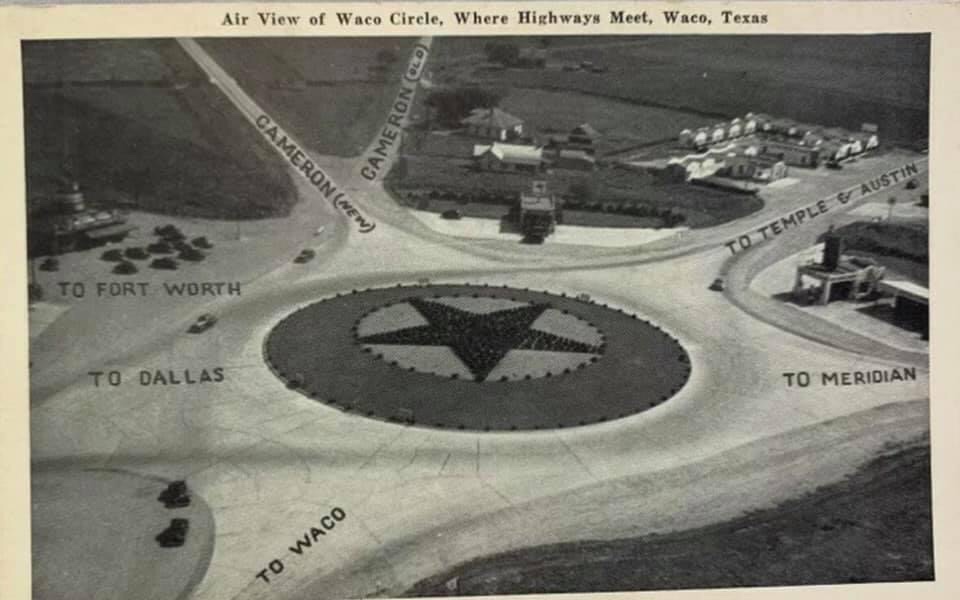
The Waco Traffic Circle. Postcard photo from our collection.
The Waco Traffic Circle was built in 1933, and highways connected to it in 1934 and 1935. The date of this photo is unknown. The Elite Café, not shown, was built in 1941. When the Circle was first built, it was “out in the country”. Wacoans could drive out S. 18th Street to Circle Road and then drive around the Circle and drive back to town. No highways were connected to it yet. But in 1934 and 1935, all the major highways around Waco were connected it, and it became the traffic hub of Waco. We’ve been “surviving the Circle” for almost 88 years!
“The Snagboat Waco”. Snagboats were steam boats that had equipment useful for clearing obstructions and debris from rivers to make the rivers more navagable for other boats. This image is from 1911. From the U.S. Army Corps of Engineers Collection.
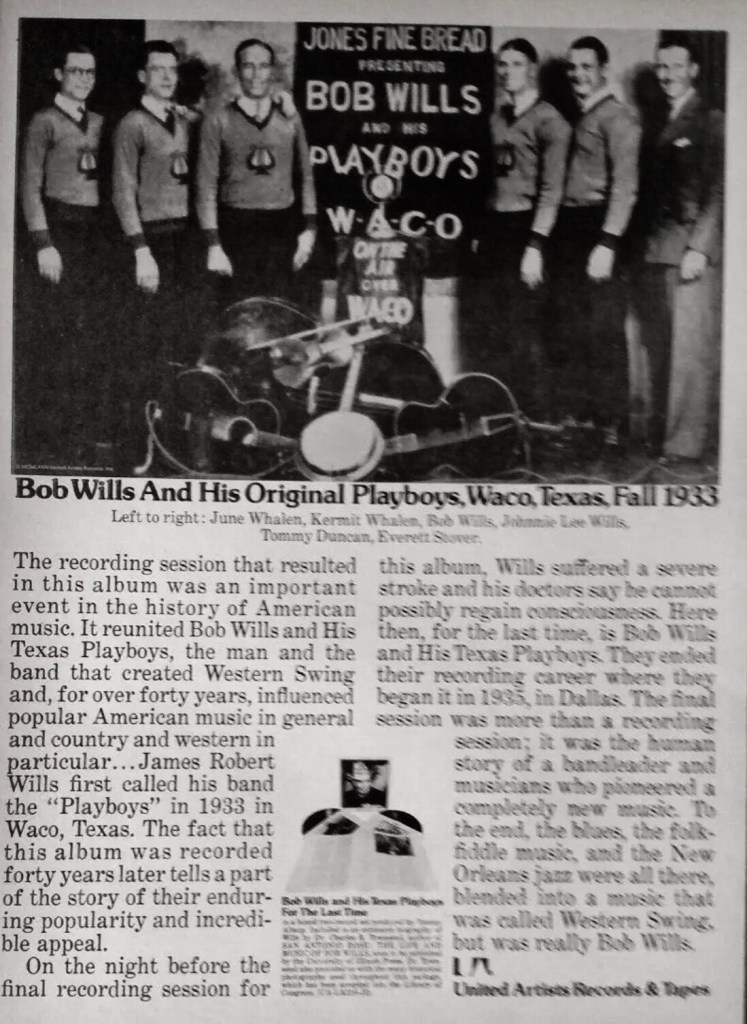
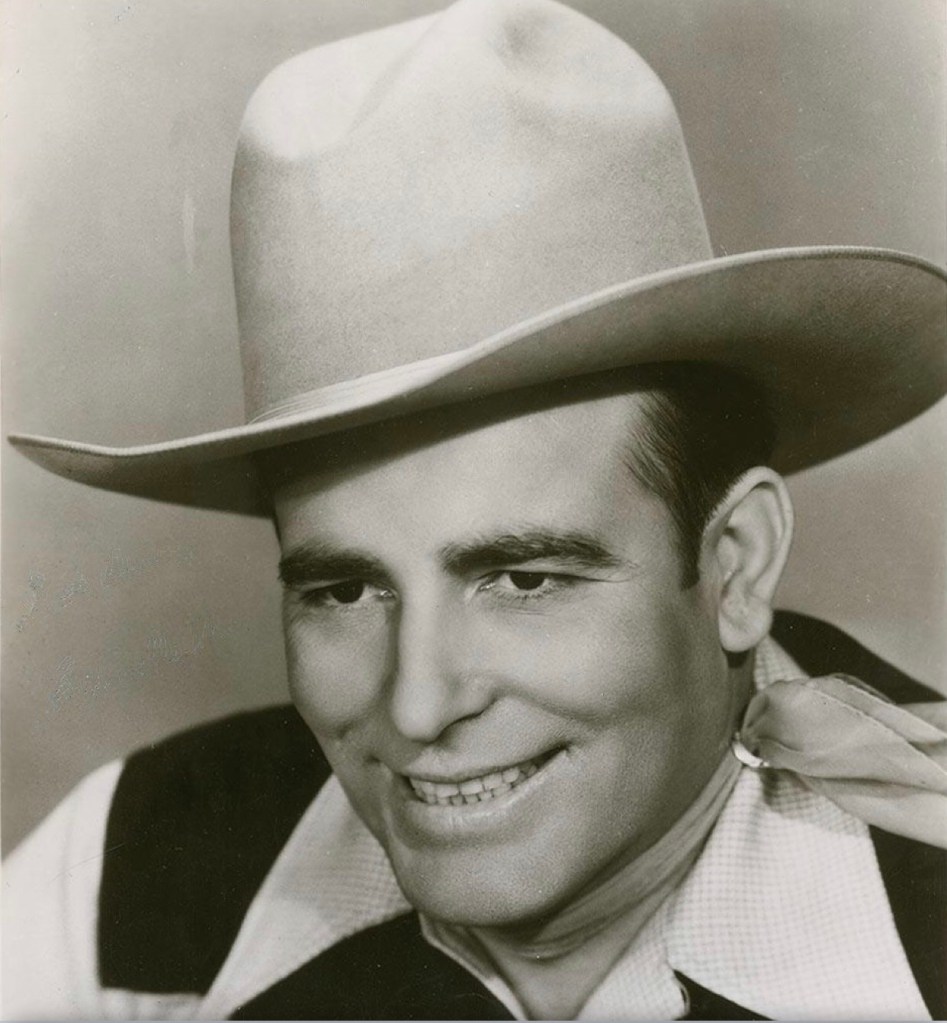
Famed country singer Bob Wills (1905-1975) was born in Kosse, Texas. This 1974 United Artists poster tells us that legendary country singer Bob Wills first called his band “The Playboys” in Waco, Texas in 1933. Here, his band is shown singing on W-A-C-O radio, sponsored by Jones Fine Bread. At the time, the radio station was located in the Amicable Building (ALICO), and it’s tower soared high into the sky from atop the building. Of course, they soared to fame as “Bob Wills and His Texas Playboys”. Notice that WACO’s slogan was “On the Air Over Waco”.
This 1974 ad photo is from eBay. This photo is from Wikipedia.
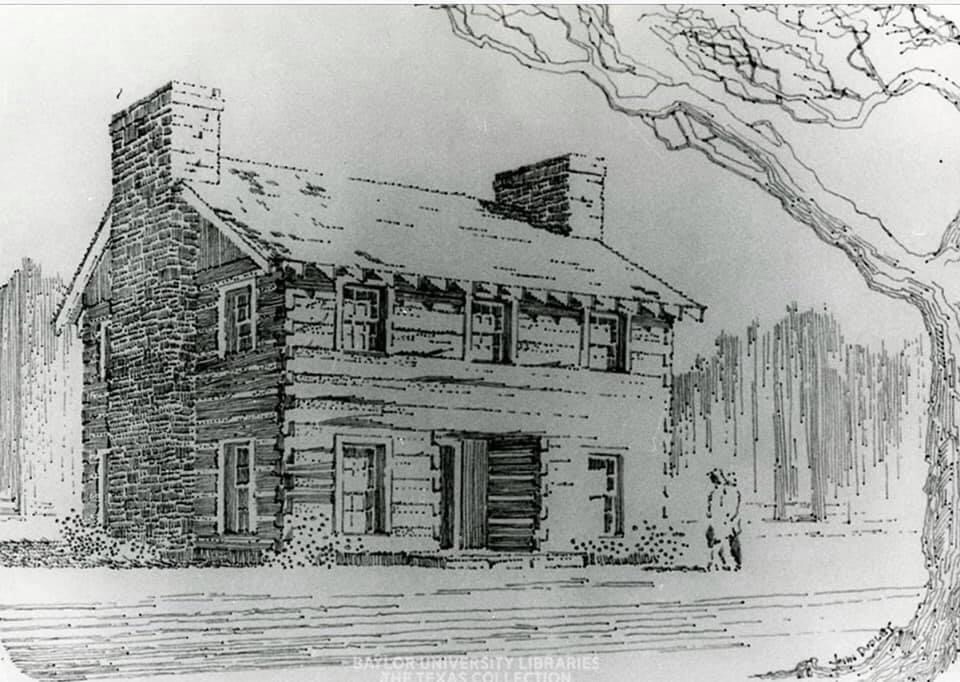
The first McLennan County Courthouse, built in 1852, was located on the Waco City Square. It was a two-story log cabin. It was on the southwest corner of the Square, at South Third Street.
The First McLennan County Courthouse. Photo from The Texas Collection, Baylor University.
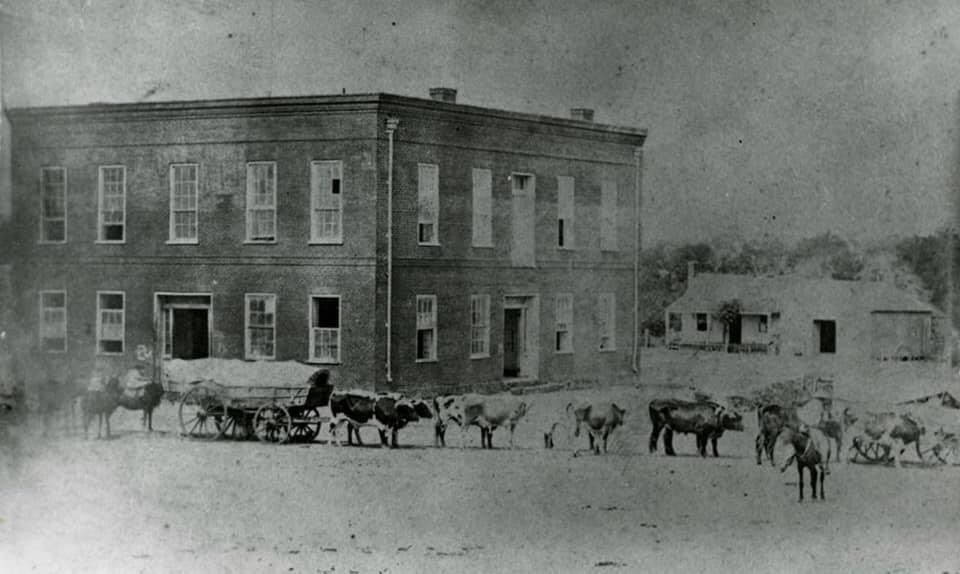
The second McLennan County Courthouse was built in 1858 and was located in the middle of the Waco City Square. It was a two-story brick structure.
The Second McLennan County Courthouse. Photo from The Texas Collection, Baylor University.
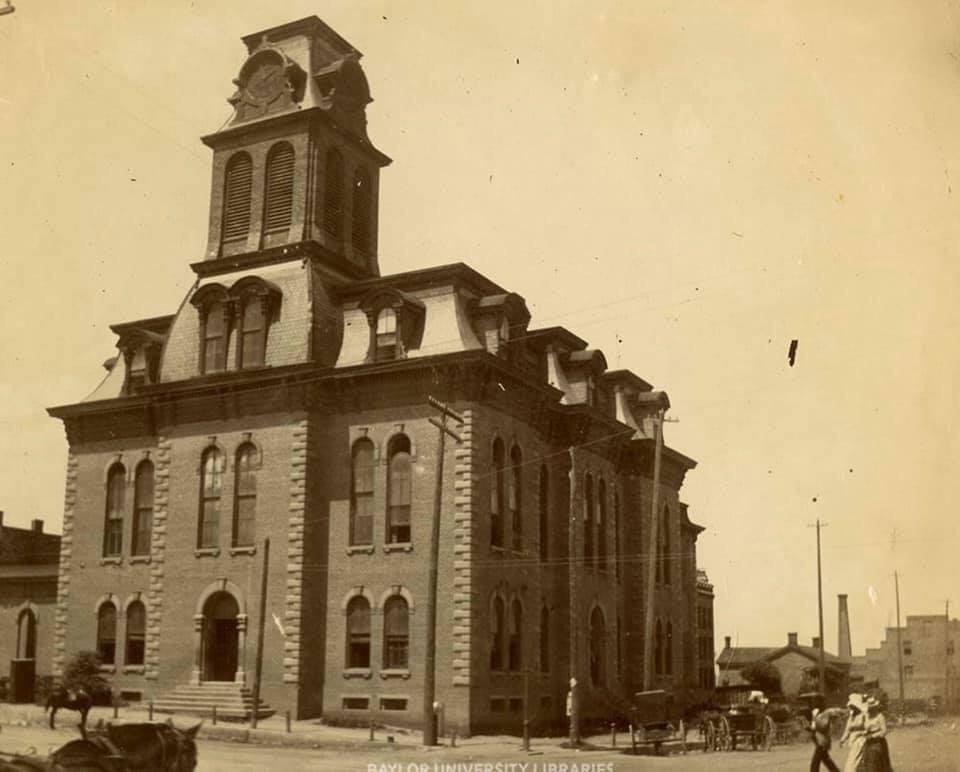
The third McLennan County Courthouse was built in 1877 on the corner of Second Street and Franklin Avenue. It was three-stories tall, with a clock tower. The growing McLennan County had outgrown this building by the 1890s, and they also expanded into office space in the Provident Building, which was located at Fourth and Franklin. In the early 1900s, it was sold to the Crow Brothers and became Crow Brothers Laundry.
The Third McLennan County Courthouse. Photo from The Texas Collection, Baylor University.
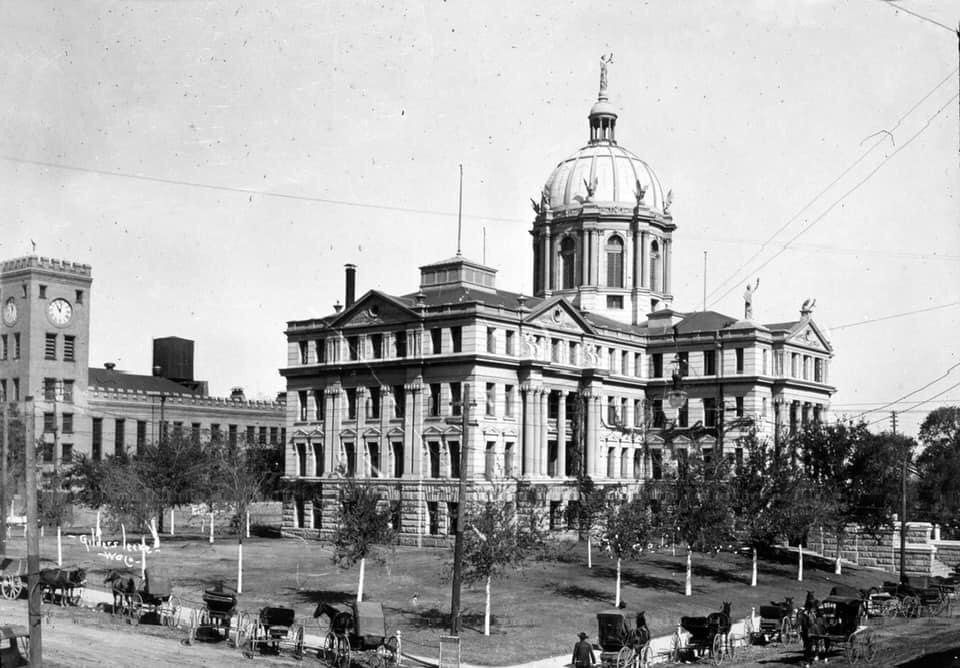
The fourth and current McLennan County Courthouse was completed in 1902. It is located on Washington Avenue, between Fifth and Sixth Streets.
The Fourth and current McLennan County Courthouse. Photo from The Texas Collection, Baylor University.
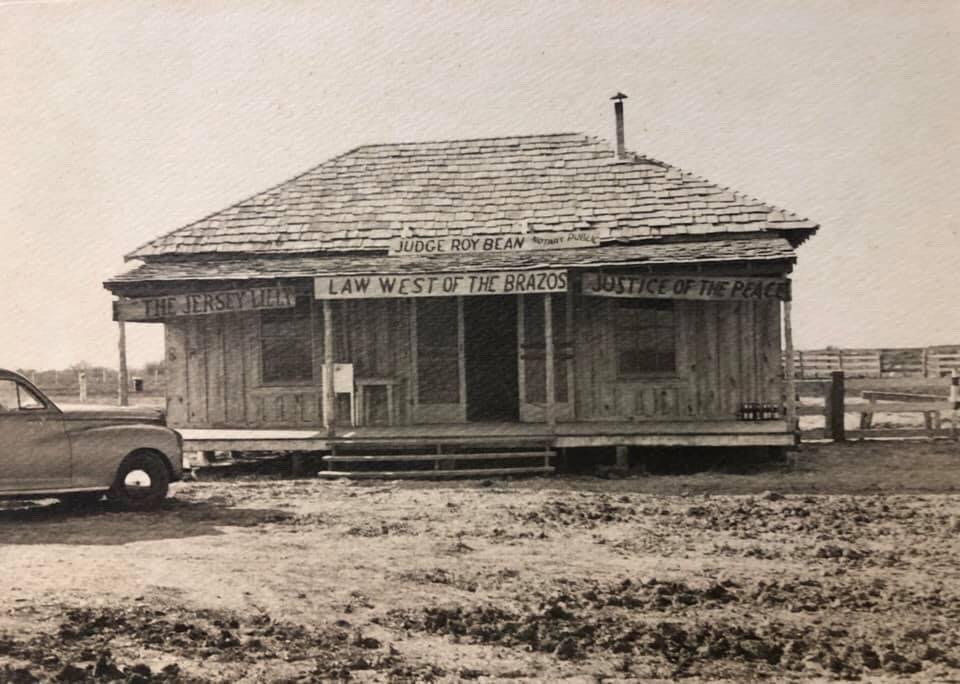
The Jersey Lilly (Beer Joint), 1946, at 19th and Park Lake Drive
Lanny French told us: “In my youth,(about 1948) I lived 2 blocks from Jersey Lily on Park Lake and it had sawdust flooring. They would change it ever so often and discard the old sawdust out back. When it rained the lost coins from beer purchases lost in the sawdust would rise to the top of the heap. Wonderful fun for a young boy. It was about a block west of the 19th & Park Lake corner on the North side of the street. Seems like there may have been a Drug Store there later.. Also although not related, there also was a Midget Car race strip a block or two further west down Park. Again before I knew better, we would go over after the races, collect cigarette buts,strip them down and re-roll them with a little cigarette rolling machine we had found.”
Photo from the Harry Blaize Photographic Collection, The Waco-McLennan County Public Library.
———- HARRY BLAIZE PHOTOGRAPHY By James Jasek
Harry Blaize was born March 22, 1921 in Waco,Texas, He lived at home with his parents most of his adult life at 2805 Morrow Ave. His father, Harry Carter Blaize, lived from 1888 to 1974, and his mother, Ethel Bohner Blaize, lived from 1891 to 1973. Other than spending a few years in the Army, Harry lived with his parents until his death November 6, 1993. He never worked and was a life member of the Model Railroad Club and the Photo Forum Photographic Club. He was an active amateur photographer who had his own darkroom and processed all his one film and made prints in his darkroom. I first met Harry when I was invited to join the Photo Forum Camera Club in 1964, and we became life-long friends. The Camera Club met at the Tom Padgitt Building on South 13th Street. Harry did not drive a car and one of the members of the club would pick him up a his home and bring him to the Camera Club meeting. Harry would take the city bus downtown then wander the streets of Waco shooting pictures of buildings all over the city. Then, he would take the bus home and work in his darkroom. He never married until later in his life. His father was a realtor and had his own business, The Blaize Realtor Company. in later years when his parents were too old for Harry to care for them, he hired a nurse to care for them. When his parents died Harry married the nurse.
Harry used a Leica IIIf camera and walked the streets of Waco taking pictures of buildings and of things that he found interesting. Before Harry died November 6, 1993, he donated his photograph collection to the Waco McLennan County Public Library.
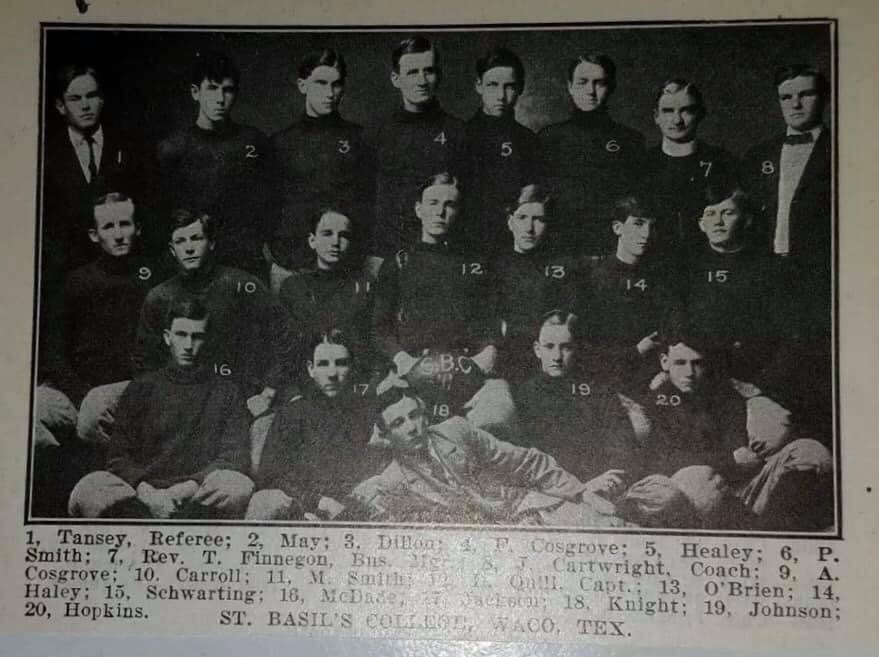
St. Basil’s College was actually a private Catholic high school for boys. It was founded in Waco in 1899 by Basilian Fathers from Canada and France. (1) At first, it was in a two-story building at Eighth Street and Clay, but moved into a new building on their property in North Waco in 1902. Out-of- town students lived in the building, but many local boys attended as well. From the beginning, both Catholic and non-Catholic boys were accepted.(2) “The first principal was Father Thomas Hayes, who was assisted by two other priests, V. J. Donnelly and Charles Collins. The opening enrollment was sixty. The main purpose of the school was college preparation, to which were added business courses, Romance languages, and a small amount of music. The library contained 3,000 volumes.” (1)
The property consisted of twenty-two acres between Windsor Avenue and Pine Street and Twenty-Fourth and Twenty-Sixth Streets. (3) Twenty-Fifth Street ended at Trice, and so it didn’t go through their property. (4) On the property was a huge four-story brick building, gymnasium, and boiler room. It had all modern conveniences, city sewerage, water and lights. (3) It was heated with steam and had a swimming pool. (1) The exact location of the building is a bit of a mystery. In his 1964 book “A Pictorial History of Waco”, Roger Conger said that it was located at Twenty-fourth and Cumberland, but their property was one block further north. In the December, 1990 edition of “Waco Heritage and History”, it is stated that St. Basil’s was in the exact spot that St. Louis Catholic Church was built in 1968. This location has been confirmed by at least two living people who saw it firsthand.
On May 25, 1915 it was announced that the school would be closing for good at the end of that term, June 9, 1915. The Fathers cited “lack of patronage” as the reason for the closing. In that article, it is stated that they owned twenty-three acres, not twenty-two as was stated earlier. (5) The building was put up for sale, but never sold.
The building was vacant until it was demolished in 1943. When it was being demolished, W.R. Phillips, the contractor tearing down the building, found a cornerstone box in a cavity in the brick wall under the cornerstone, not in the cornerstone. The contents included “a metal token, ‘good for one drink at Wes Damron’s House of Lords’, a well known saloon of other days. Other items included a two-page Latin manuscript in a copperplate hand, explaining what the occasion was and telling the names of various officials of church and state; several letters about the new college, copies of the Waco-Times Herald, The Waco Tribune, and The Waco Telephone, and a church paper. A pasteboard box full of silver and copper coins of the United States, Canada, Mexico and other western hemisphere nations, including a half-dime minted in 1857. The drink token was found with the coins. The laying of the cornerstone took place April 5, 1902.” (6)
In 1947, deed to a 60-foot wide strip right-of-way between Windsor and Proctor, was given to the city by Bishop C.E. Byrne, Bishop of the Diocese of Galveston. This property was donated to the city, by the Catholic Church for the purpose of connecting the two separate parts of Twenty-fifth Street. It was announced construction of the new street was to be done in 1948. (7)
At an April 3, 1951 meeting, it was announced that Major General Warren R. Carter had selected the old St. Basil’s property as the spot for locating the permanent headquarters of the Flying Training Air Force, FTAF, which he commanded. The property had to be rezoned to commercial from residential, and the residents in the area had to approve. Twenty-two of the twenty-six adjacent property owners approved. John Sheehy, representing Most Rev. Louis J. Reicher, Bishop of Austin, owner of the 900 by 200 feet of land had requested the zoning change the previous night. The new construction will be “a one-story masonry building containing 75,000 square feet of floor space on the site of the former St. Basil’s grounds to house between 750 and 1000 military and civilian employees.” No on-street parking would be needed, because a parking lot on the property was a part of their plan. Waco was chosen because of the friendliness and relationship of the last 10 years between Waco and the Air Force. (8)
In 1953, Boy Scout Troop 26 found an award band in their Scouthouse that was on the old grounds of St. Basil’s, now the FTAF grounds. On the band was inscribed “Troop 12, 1917, War Bond Sale Award”. Troop 26 leader Capt. R.J. Linke said they were going to present the award to the current Troop 12, and were looking for men who had been original members to tell them about the award.(9)
When St. Basils was built in 1902, it sat in the middle of a desolate prairie. Today, the area is filled with homes and trees, businesses, St. Louis Catholic Church and the Reicher High School Campus.
(C) 2020 George Randall Scott
SOURCES:
(1) “St. Basil’s College” by R.E. Lamb, C.S.E. The Texas State Historical Association Online.
(2) “St. Basil’s College”. Photo with cutline in The Waco Tribune Herald, October 15, 1961.
(3) “For Sale”. An ad in The Waco Morning News, August 15, 1915.
(4) “Melbourne Heights” An ad in The Waco News Tribune, September 23, 1928.
(5) “St. Basil’s College to Close Its Doors”. The Waco Morning News, May 25, 1915.
(6) “Cornerstone Box From St. Basil’s College Opened”. The Waco News Tribune, July 23, 1943.
(7) “Right of Way For Opening Of Street Received By The City”. The Waco News Tribune, October 29, 1947.
(8) “St. Basil’s College Property Here Sought as FTAF Site” The Waco News Tribune, April 4, 1951.
(9) “Scouts Find Award Band On Old Pole”. The Waco Tribune Herald, January 11, 1953.
Photo by Fred Gildersleeve. From the Gildersleeve-Conger Collection, The Texas Collection, Baylor University. From the book “Municipal Hand Book of The City of Waco” (1912) by Mayor J. H. Mackey.Photo by Fred Gildersleeve. From the Gildersleeve-Conger Collection, The Texas Collection, Baylor University. Photo from the book “Gildersleeve: Waco’s Photographer” (2018) by Geoff Hunt and John S. Wilson.The Waco Morning News, August 15, 1915Postcard image from eBay. St. Basil’s 1911 Football Team
We are glad you are here! Please visit our Galleries, photo albums that record the rich history of Waco. Click the main photo to see the contents of each gallery, then click the individual photo to enlarge and read the photo credit. And feel free to SHARE via your social media. Each gallery will grow, and new galleries will be added regularly, so check back often. To stay up-to-date, please follow our Waco Blog.
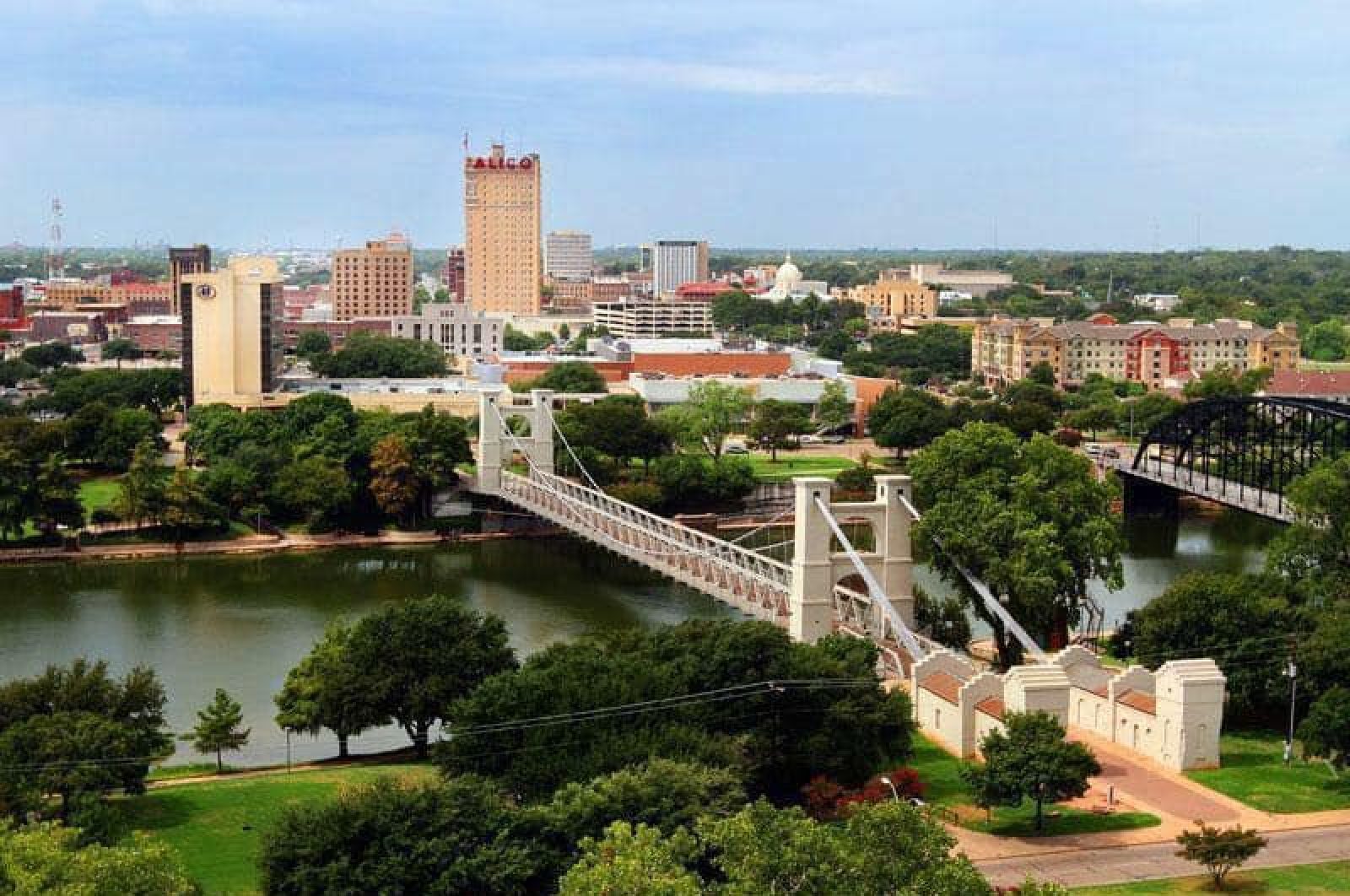
Our cover photo showing the historic Waco Suspension Bridge and our hometown is by Waco photographer Mark Randolph, and appears courtesy of Mark Randolph/City of Waco.
We exist to preserve the history and memories of Waco, Texas. There are many photos on this site, and we have made every effort to identify the original photographer and source of each photo. We do not own the copyright on any of these photos, and they are used here for non-commercial, educational, fair use. Please contact the photographer or contributor for their terms of use before sharing or making prints.
If you feel that YOUR copyright has been violated, or if you were not properly credited for a photo shown on this page, please contact us at wacotexashistoryinpictures@gmail.com. Copyright claims are taken seriously. If you hold the copyright to content posted here and notify us, the content will be removed immediately.





 Waco, Texas History in Pictures